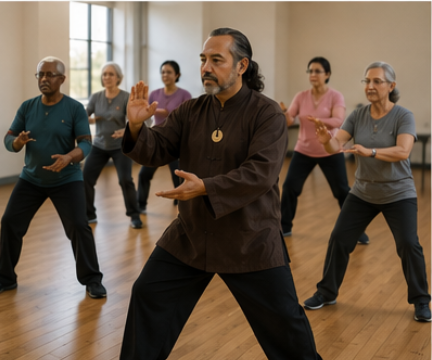
Move More Comfortably
Explore posture, coordination, gentle stepping, and comfortable movement patterns. Discover how awareness can change the way everyday movement feels.
A Different Way to Move.
A Different Way to Experience Life.
A little more balance. A little more strength.
A little more confidence. A little more room to breathe.
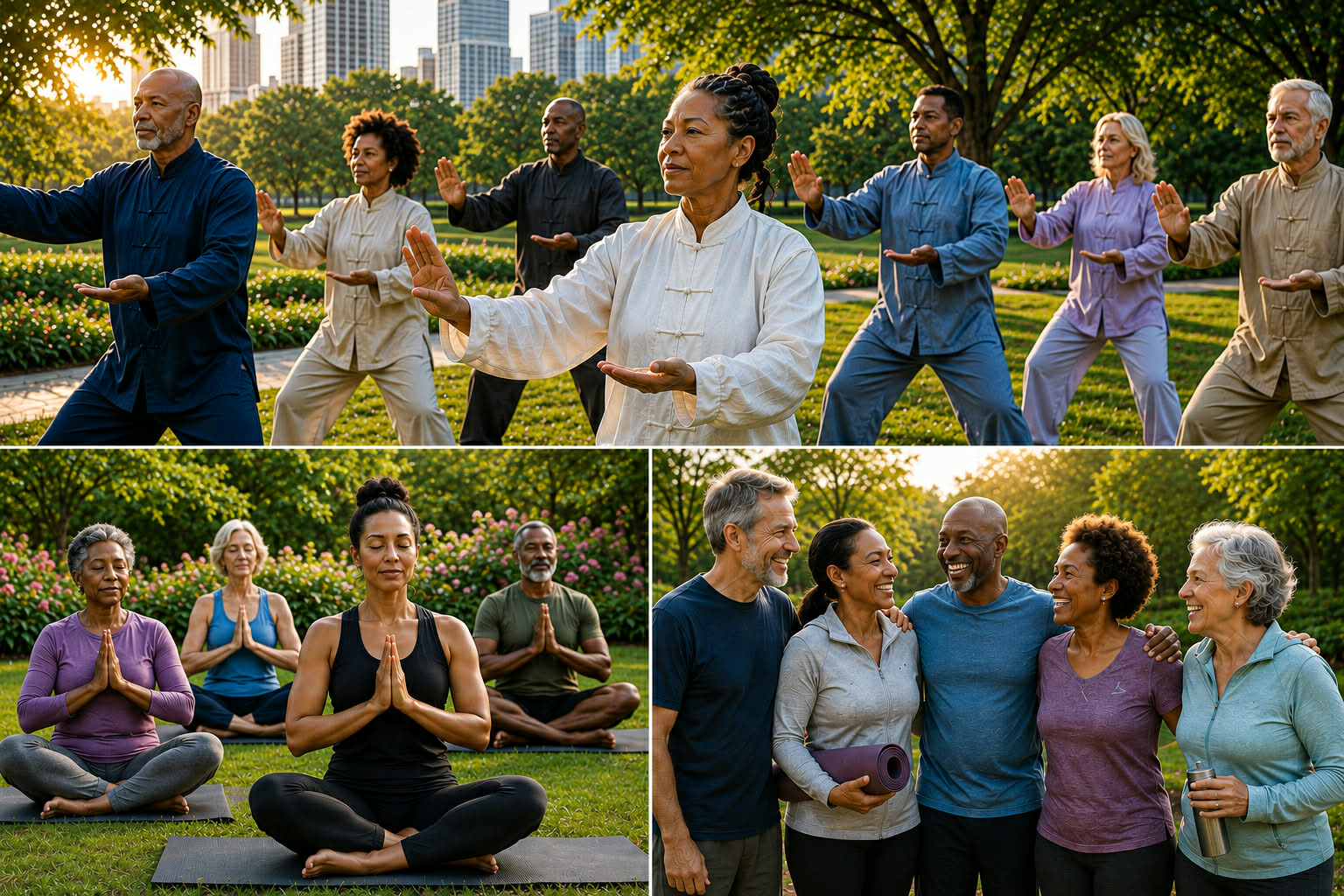
In TaiJiQuan, attaining softness doesn't mean becoming weaker or simply learning to relax. It means discovering how to move with less unnecessary tension, greater coordination, and more effective strength.
Through practice, we cultivate qualities that can enrich not only the way we move, but the way we experience everyday life.
We sit. We rush. We carry tension in places we hardly notice. We adjust our lives around stiffness, stress, fatigue, or the quiet suspicion that our balance isn't quite what it used to be.
And often, the advice is to do more. Work harder. Push through.
TaiJi offers another possibility: learning to move with greater awareness, coordination, and ease. Not by fighting your body, but by getting to know it.
TaiJi is not simply a collection of poses. Every movement grows from another, carrying balance, intention, and continuous change.
TaiJi gives us an opportunity to explore physical capability and mental awareness together. People come for different reasons—and discover different things along the way.
Explore posture, coordination, gentle stepping, and comfortable movement patterns. Discover how awareness can change the way everyday movement feels.
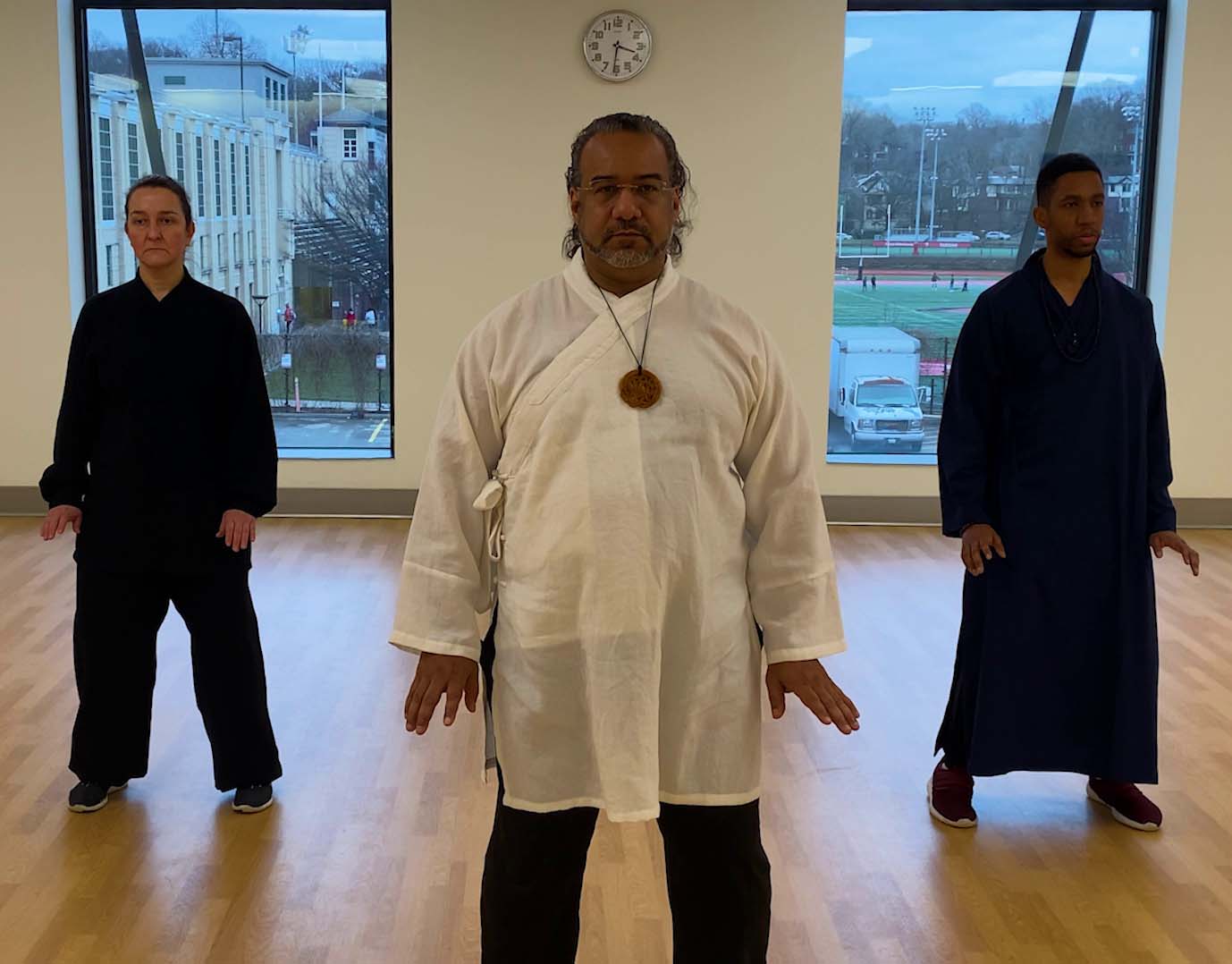
Practice shifting weight, recognizing your center, and moving with greater stability. Balance becomes something you investigate, not merely something you hope to keep.
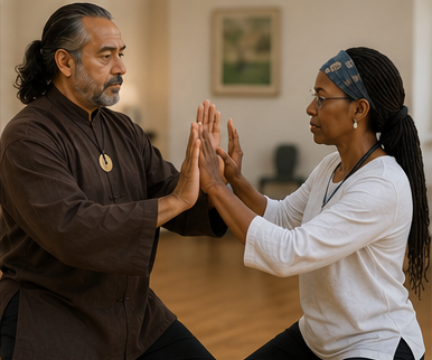
Give attention to breath, movement, and the present moment. Practice can offer a welcome interruption to the constant demands of daily life.
Each image captures a moment in a much larger movement. Tap any photograph to discover what is happening beneath the surface. Read a little, read a lot, or simply enjoy the imagery.
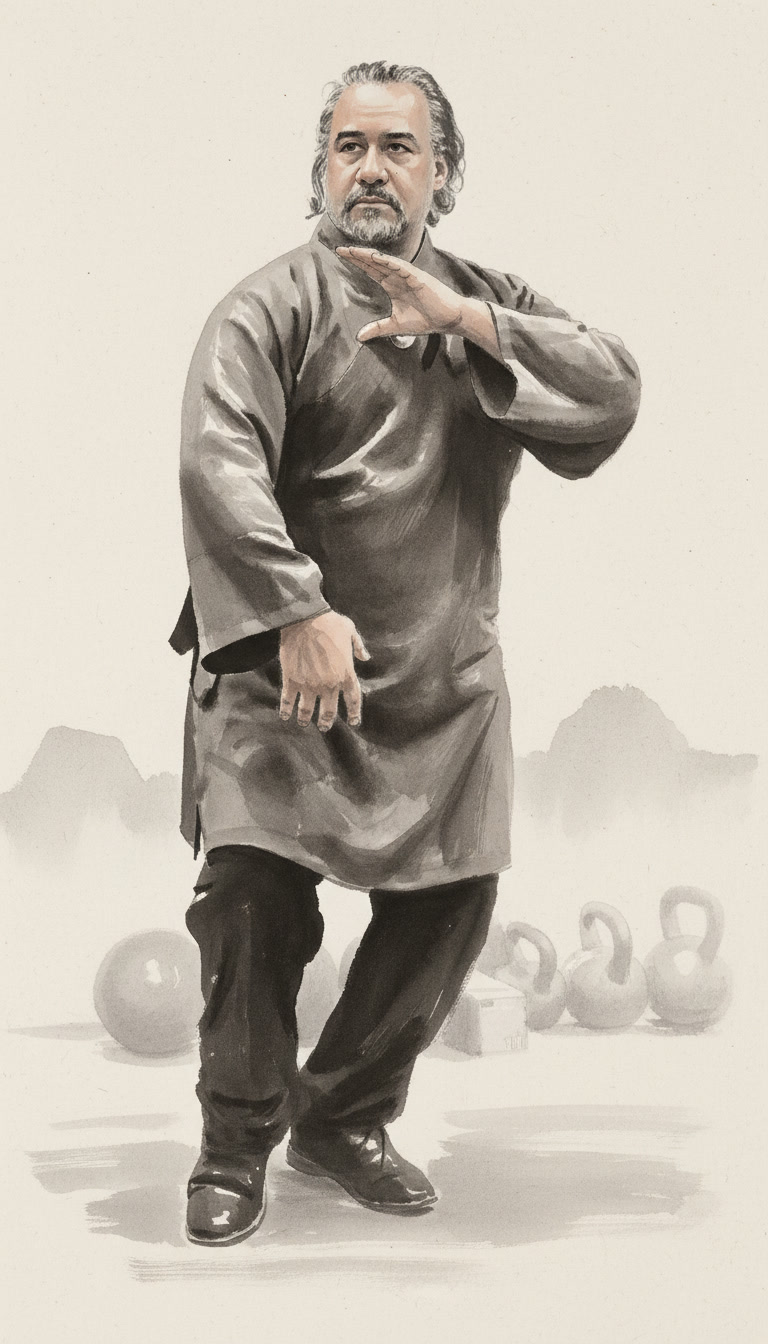
What happens before the first movement?
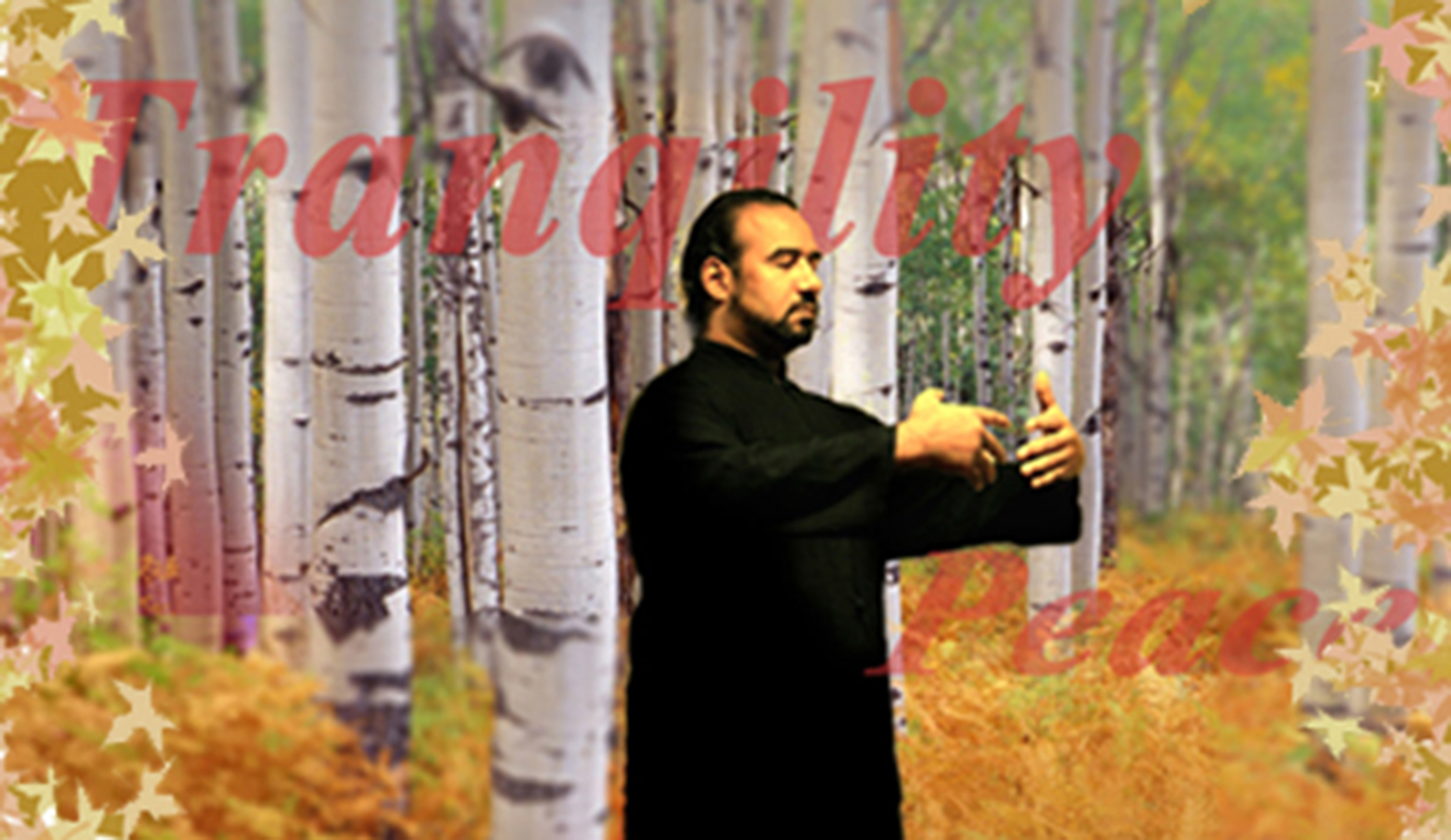
In TaiJi philosophy, Wu Ji represents limitless potential: the undifferentiated state before Yin and Yang emerge.
The practitioner stands quietly, balanced and relaxed. Nothing is forced. Attention settles, breathing becomes natural, and the body discovers a neutral starting point.
When intention stirs and movement begins, stillness gives way to Tai Ji—the dynamic interplay of Yin and Yang. An entire practice emerges from what appeared to be nothing.
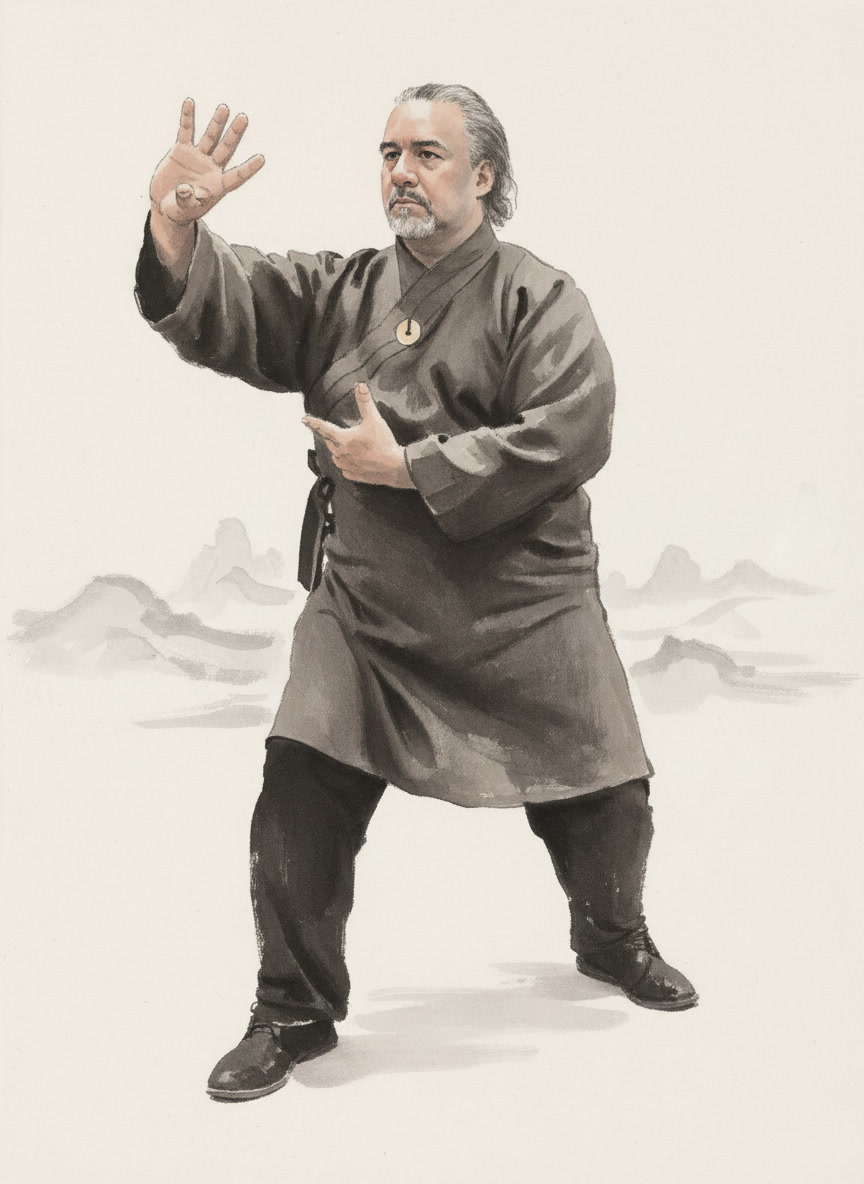
Can strength come from relaxation?
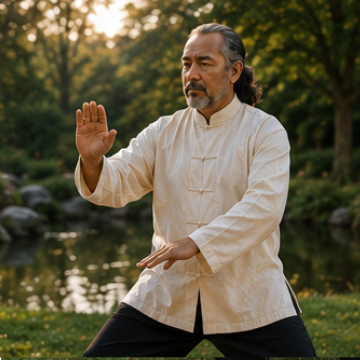
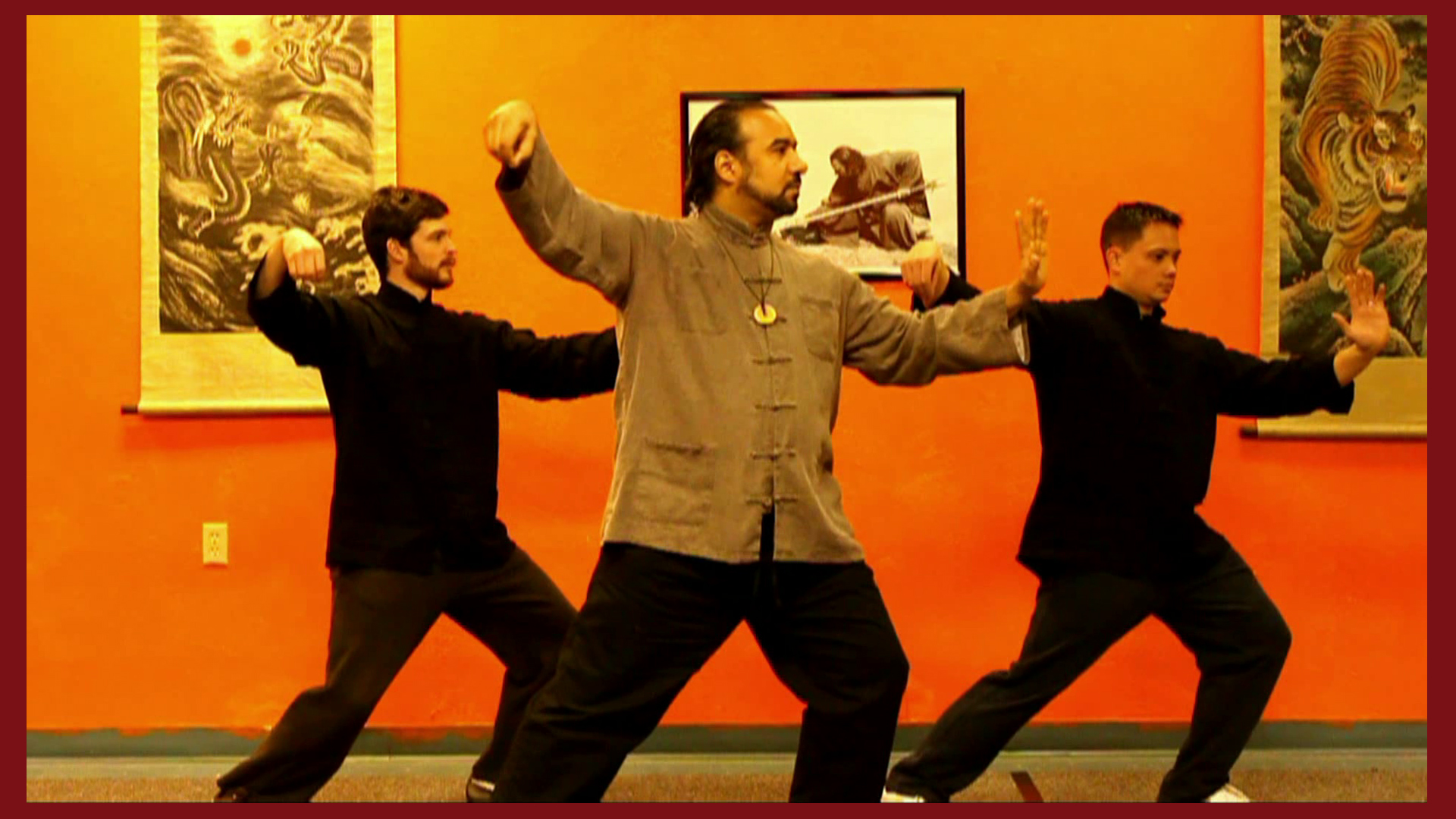
Ward Off introduces an expansive quality of force known as Peng. Its strength is not produced by simply tightening the muscles and pushing harder.
The practitioner sinks, maintains structure, and allows the whole body to participate. The result is a buoyant, outwardly expanding force supported by balance and connection to the ground.
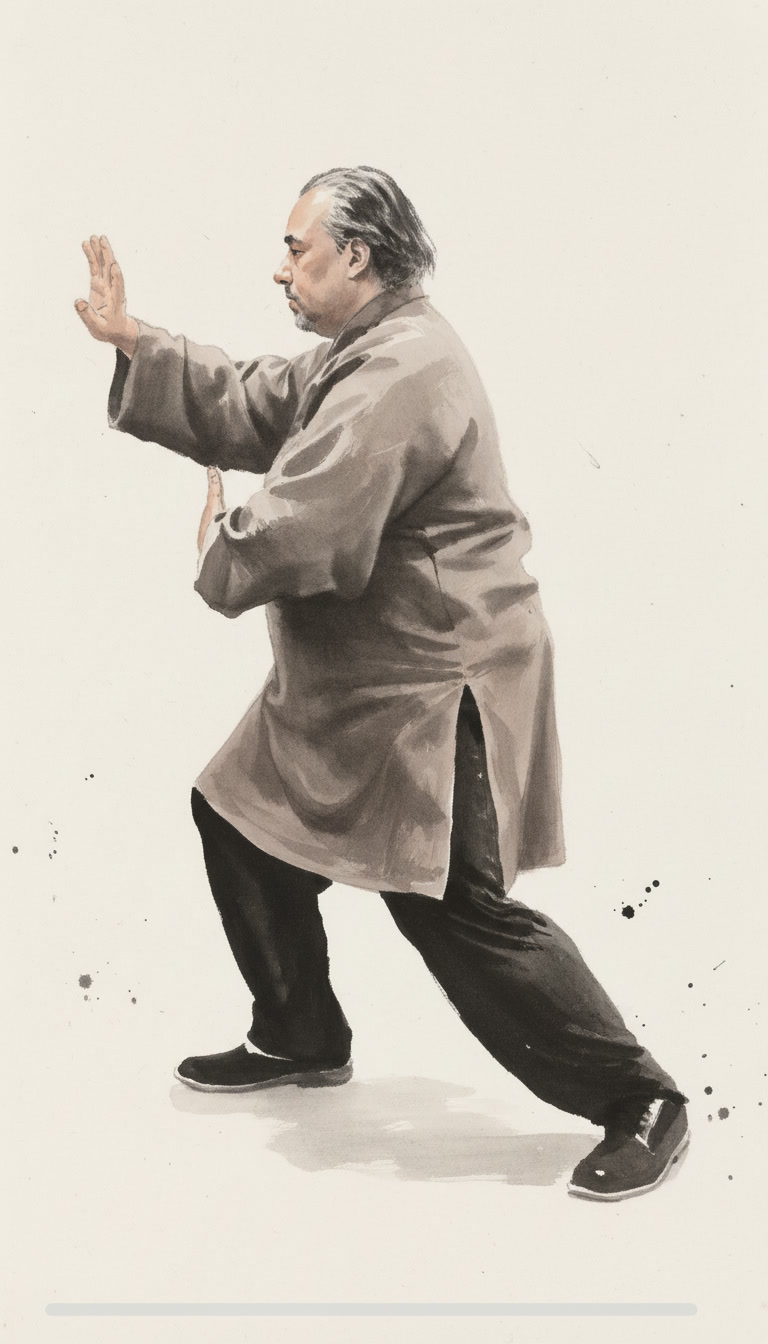
What can a different angle reveal?
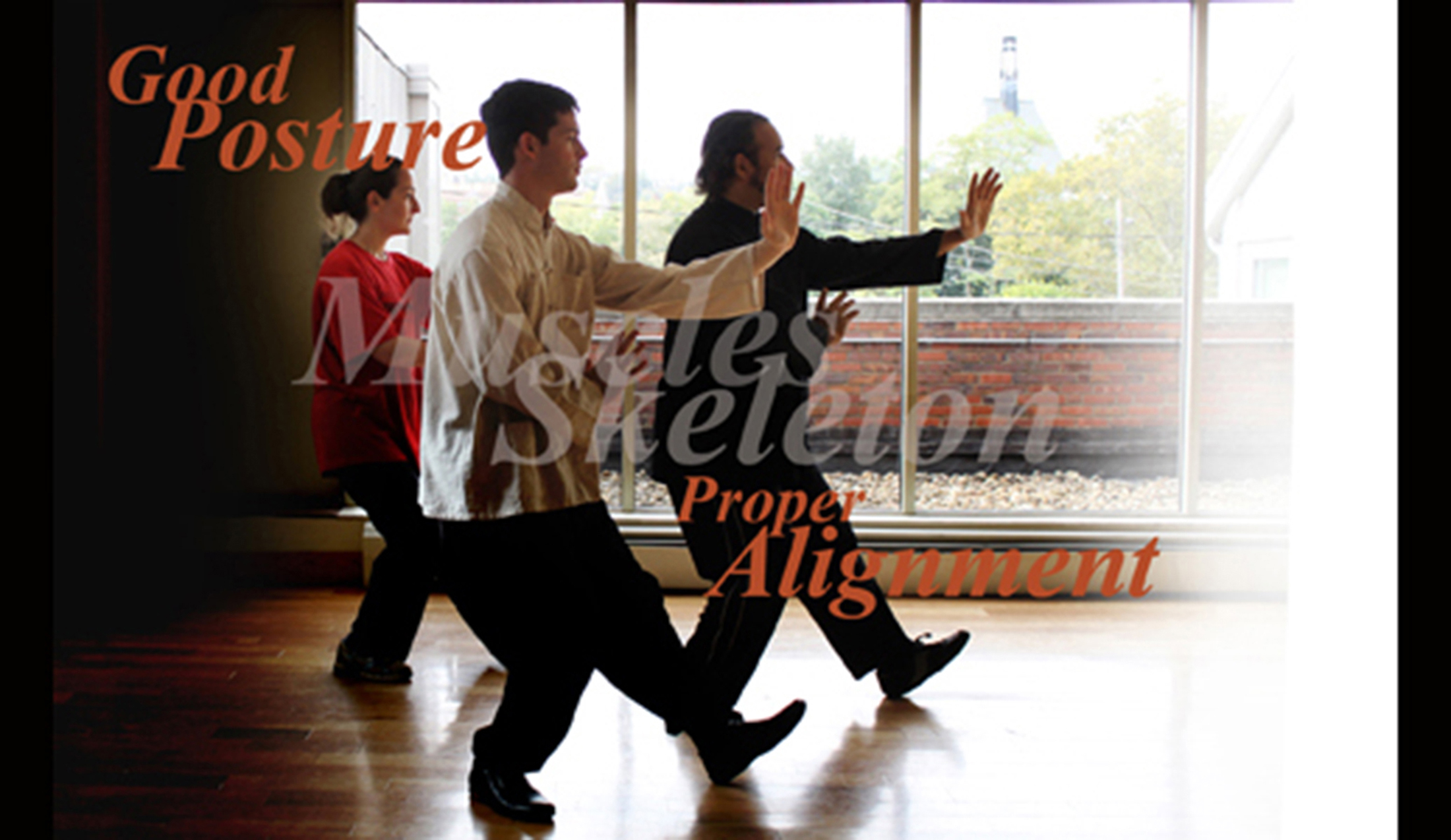
This is the same Ward Off movement, viewed in profile. Changing perspective makes it easier to observe relationships between posture, arm structure, alignment, and the body's supporting base.
One of TaiJi's enduring lessons is that understanding often changes when we learn to look from another direction.
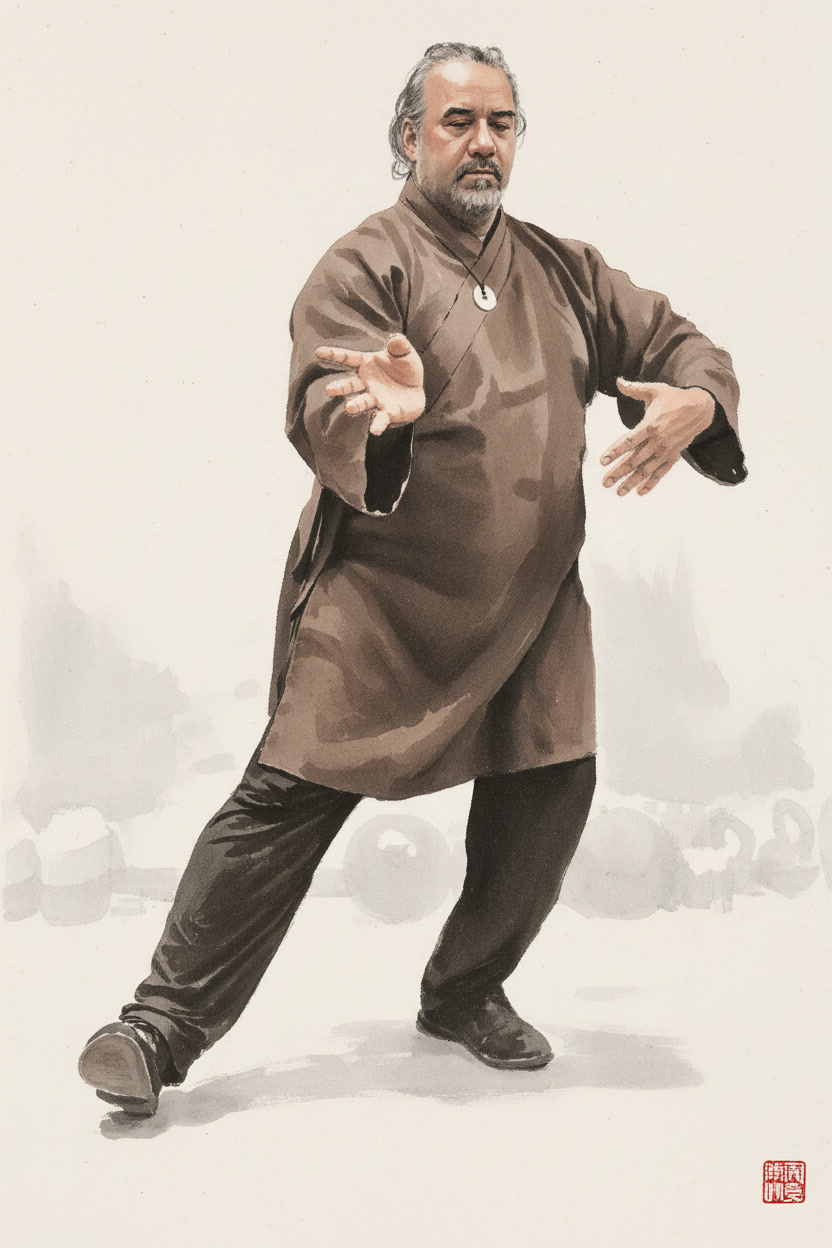
What if yielding is the intelligent response?
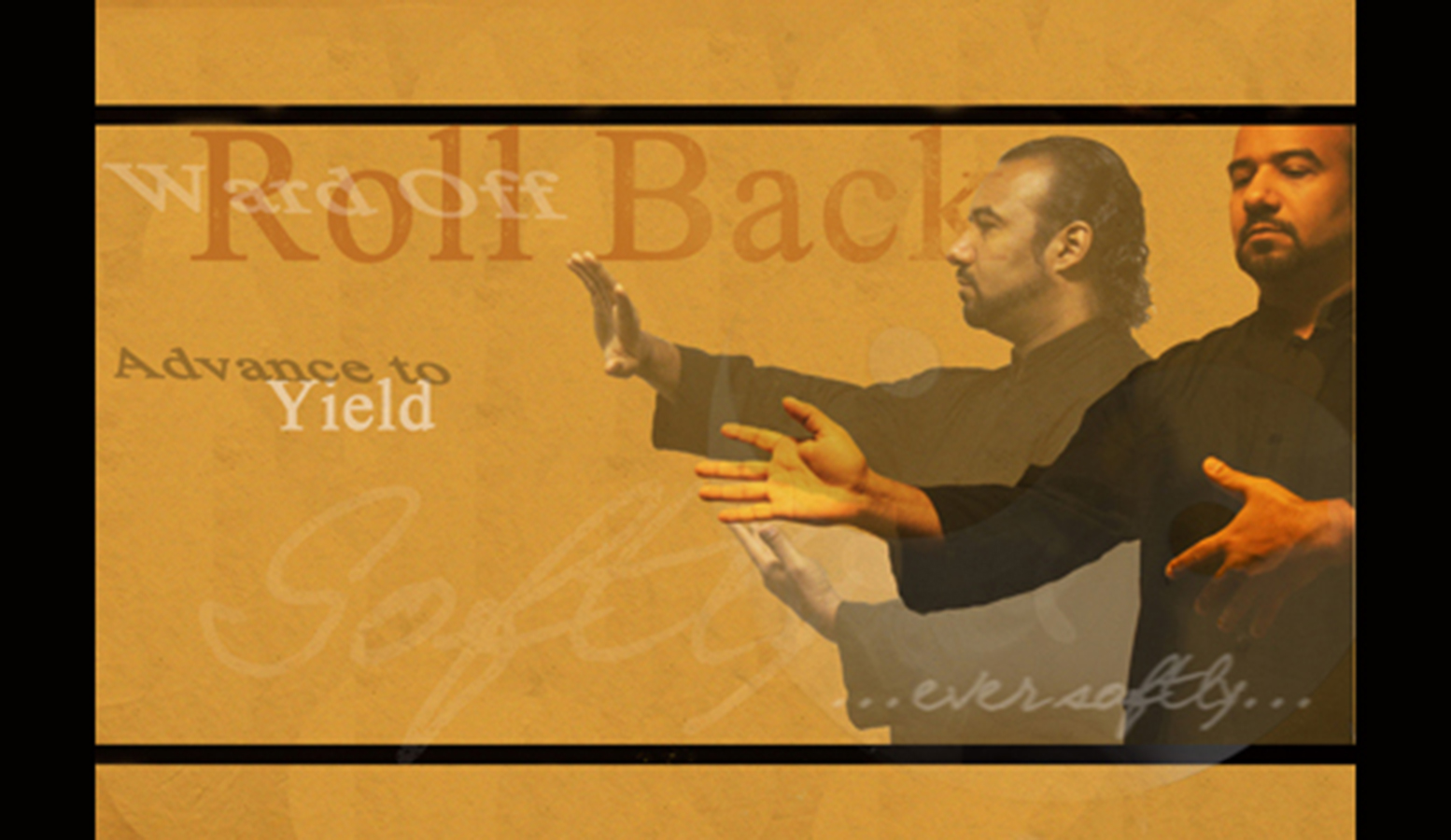
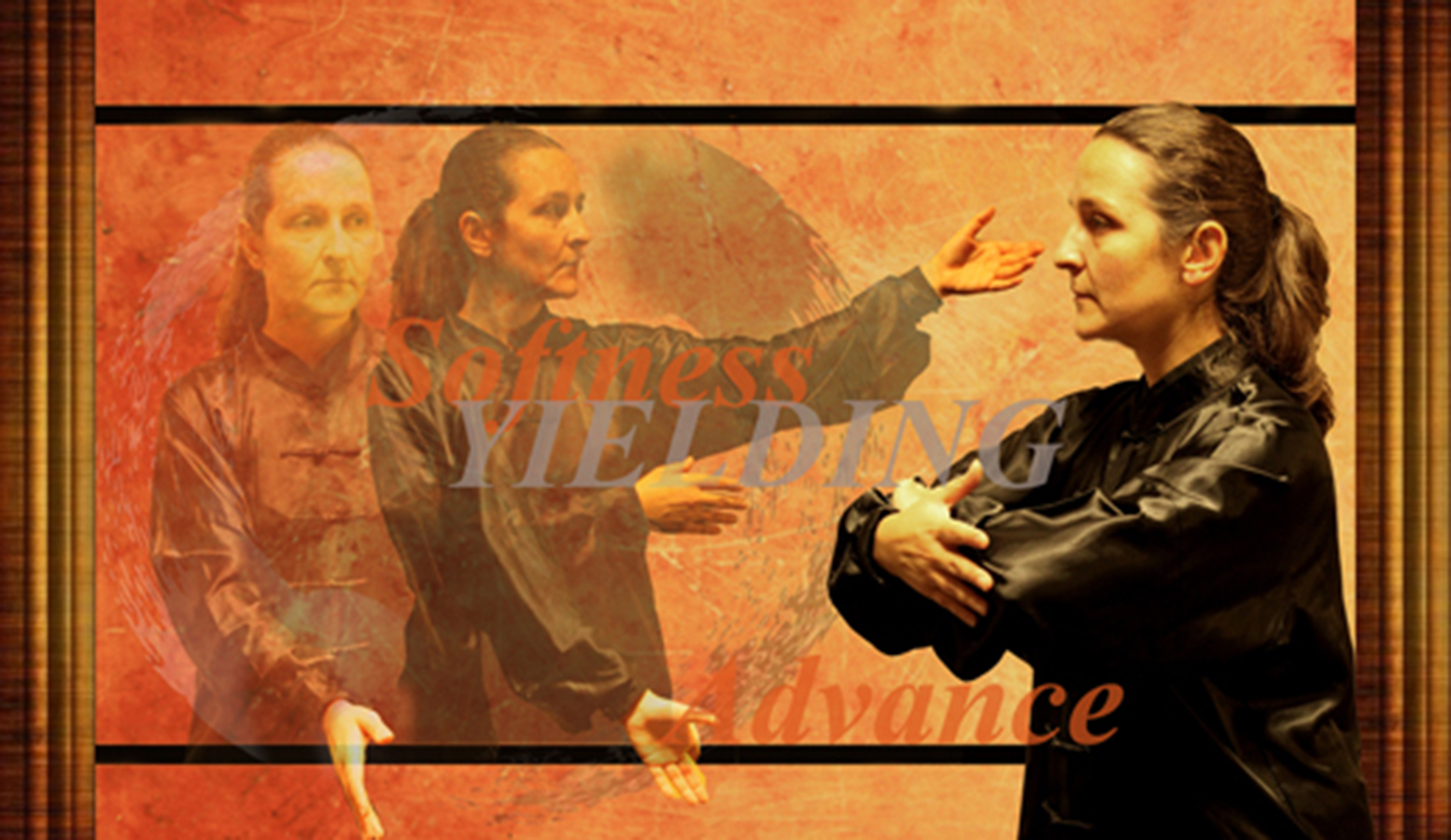
Roll Back, or Lu, is one of TaiJi's eight fundamental energies and a particularly expressive example of Yin.
Rather than meeting incoming Yang force with an opposing force, the practitioner receives, redirects, and yields. The movement draws inward while preserving balance and structural awareness.
Sometimes the most effective response is not resistance, but a change in direction.
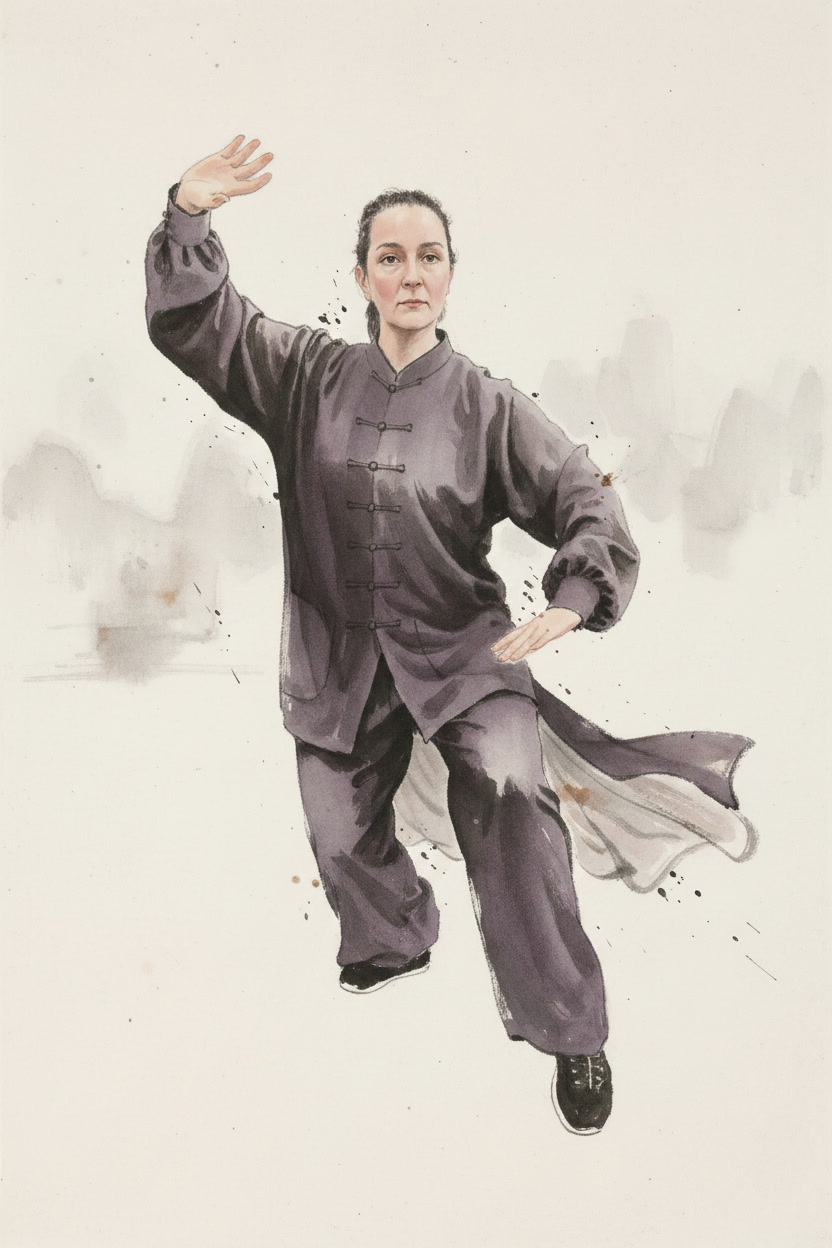
Is balance always symmetrical?
White Crane Spreads Wings offers a striking study in contrast. One side rises as the other settles; the body expresses different qualities of Yin and Yang simultaneously.
The practitioner explores how opposing directions can remain connected through one stable center.
Balance, we discover, is not necessarily about making both sides identical. It is about maintaining harmony while they do different things.
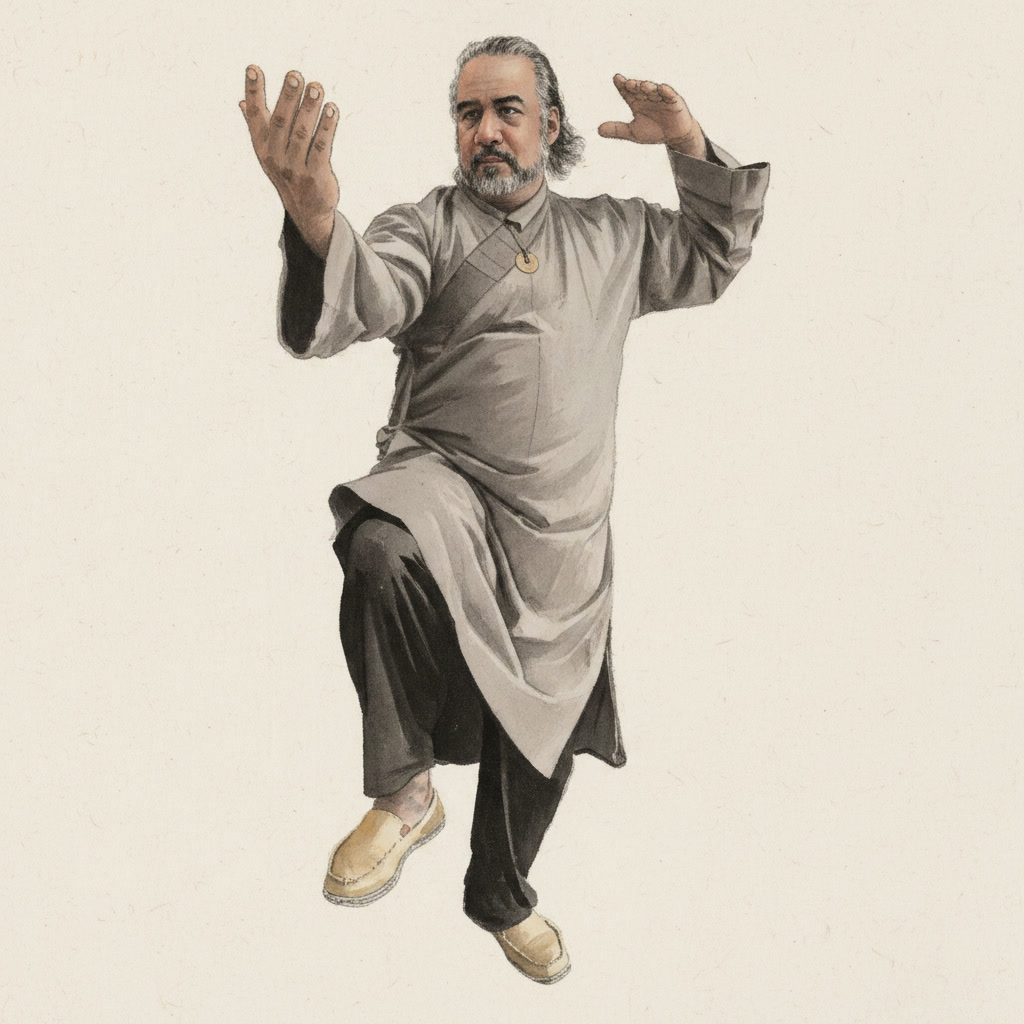
Can you move confidently without looking back?
Repulse Monkey asks the practitioner to step backward while maintaining coordination, posture, and awareness.
Without relying on constant visual confirmation, attention turns toward the feet, the ground, weight distribution, and the body's sense of position in space.
The exercise becomes a lesson in proprioception, stability, and trust in carefully developed movement skills.
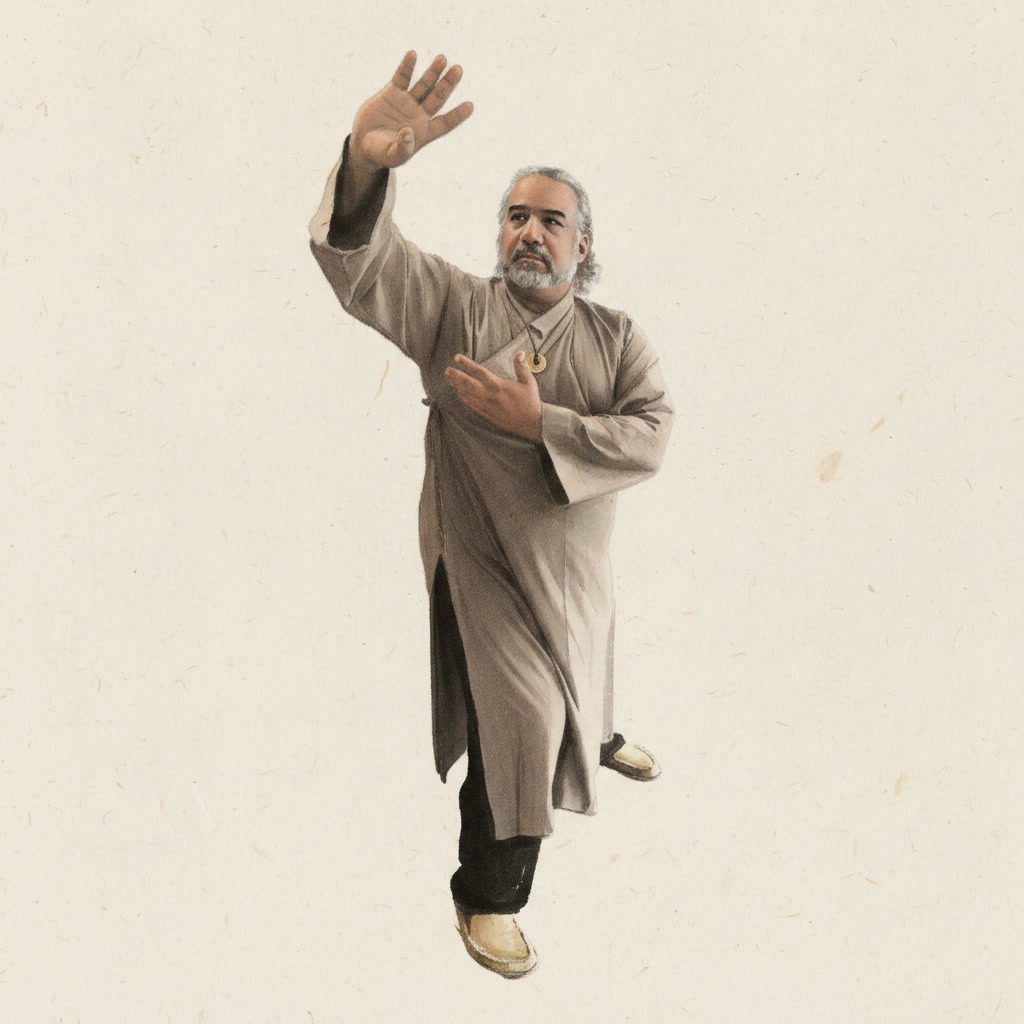
What if your arms weren't doing the work?
In Cloud Hands, movement does not begin with the shoulders independently waving the arms. It begins at the center.
Rotation of the waist and lower dantian guides the movement. As weight shifts from one leg to the other, one hand rises while the other sinks. The arms follow like branches carried by a turning trunk.
The result is a continuous conversation between Yin and Yang—rising and falling, fullness and emptiness, each movement flowing into the next without a hard edge.
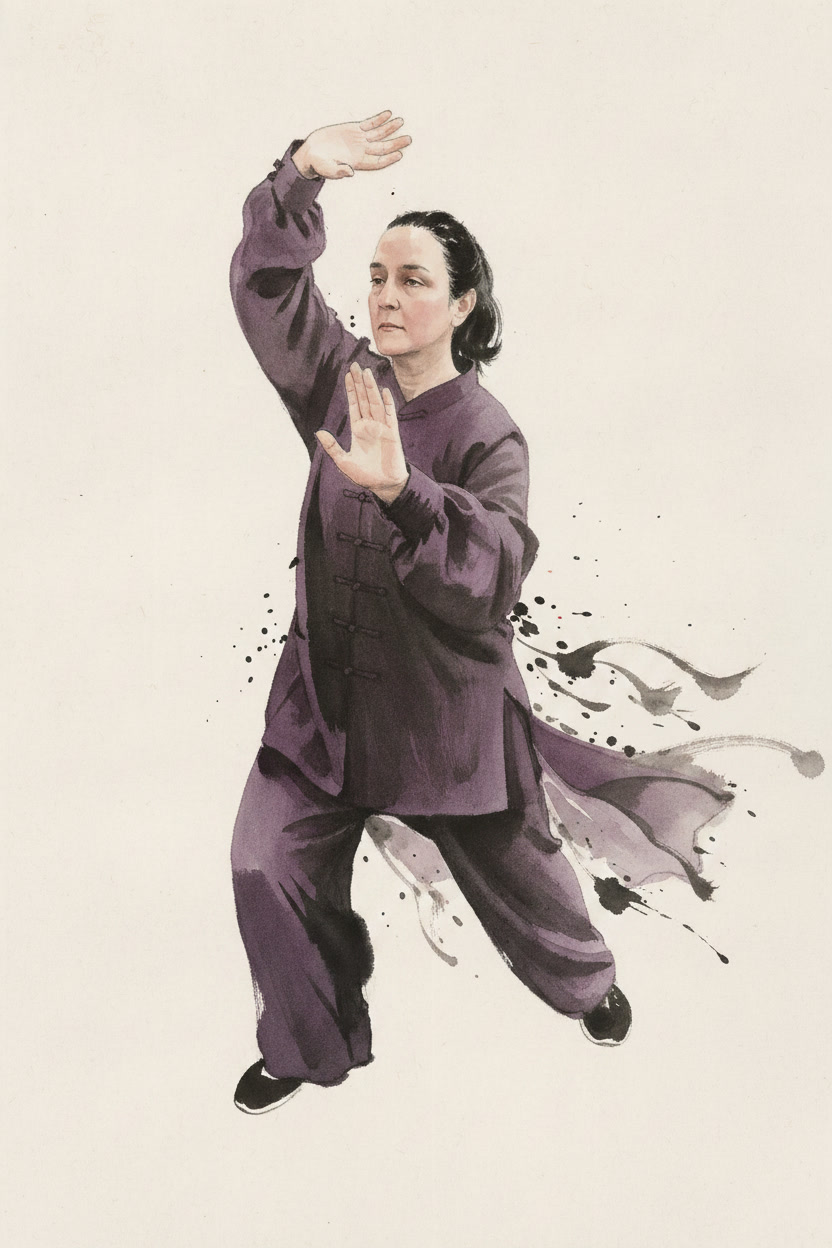
How does the whole body work as one?
Like a weaver passing a shuttle back and forth, this movement transfers energy across the body.
The waist turns, the feet pivot, and weight shifts while the practitioner maintains a stable root. Force is received on one side and expressed through the other.
Fluidity and stability are not opposites here. They depend upon one another.
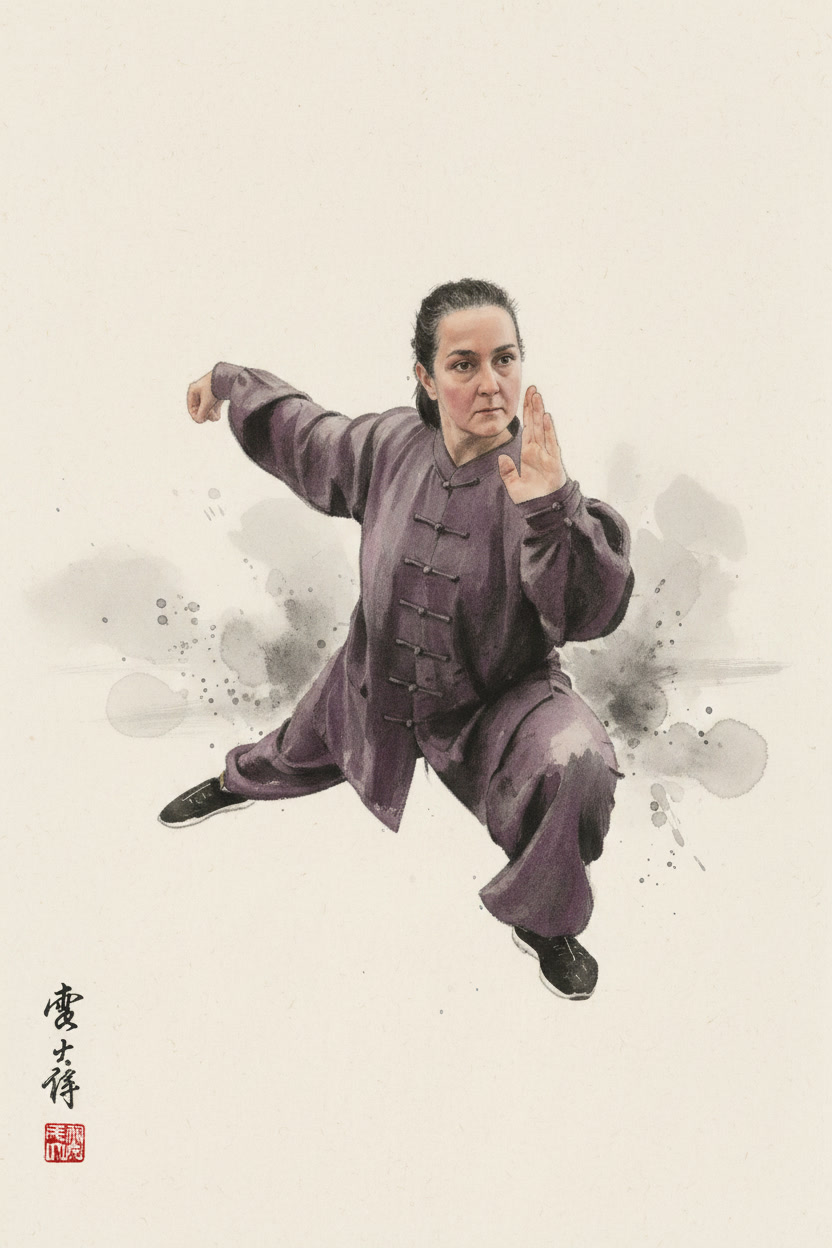
Does softness mean collapsing?
Not in TaiJi.
Snake Creeps Down explores deep, controlled lowering while preserving structural integrity. The body remains connected and elastic rather than becoming limp.
As the practitioner coils downward, tissues lengthen and elastic potential can be stored, preparing the body for the transition that follows.
It is an extraordinary example of softness containing strength—and stillness preparing for movement.
It is the ability to respond without unnecessary resistance—to remain adaptable, connected, and capable of change.
You don't need to know anything about TaiJi before you begin. Curiosity is plenty.
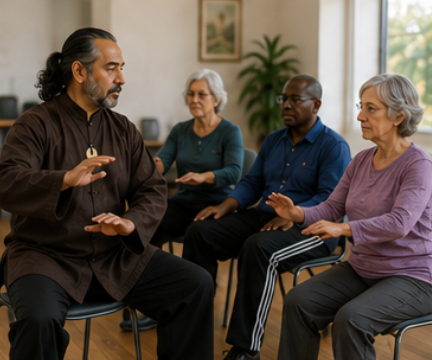
No. TaiJi is a practice through which coordination, balance, and body awareness can be developed over time. You begin with the abilities you bring today.
Not at all. People of different ages explore TaiJi for movement quality, balance, concentration, traditional knowledge, and personal development.
Historically, TaiJiQuan is a Chinese martial art. Its methods also offer rich opportunities to cultivate mindful movement, posture, coordination, relaxation, and attention. The emphasis can vary by class.
Not on your first day. Learning develops progressively, beginning with accessible movements and fundamental principles. The form is a journey, not an entrance exam.
That's one reason people become interested in TaiJi. Let the instructor know about your comfort level and mobility needs. Movements can often be adapted, although individual suitability depends on your circumstances.
No. The history and philosophy of TaiJi enrich our understanding of the practice, but participation does not require adopting any religious or spiritual beliefs.

TaiJiQuan developed within the rich traditions of Chinese martial culture, where movement, breath, awareness, intention, and structural understanding are cultivated together.
Its practice invites us to examine the relationship between opposing yet complementary qualities: firmness and yielding, activity and stillness, expansion and retreat.
These are not merely abstract ideas. We encounter them in our posture, our balance, our coordination, and the choices we make as we move.
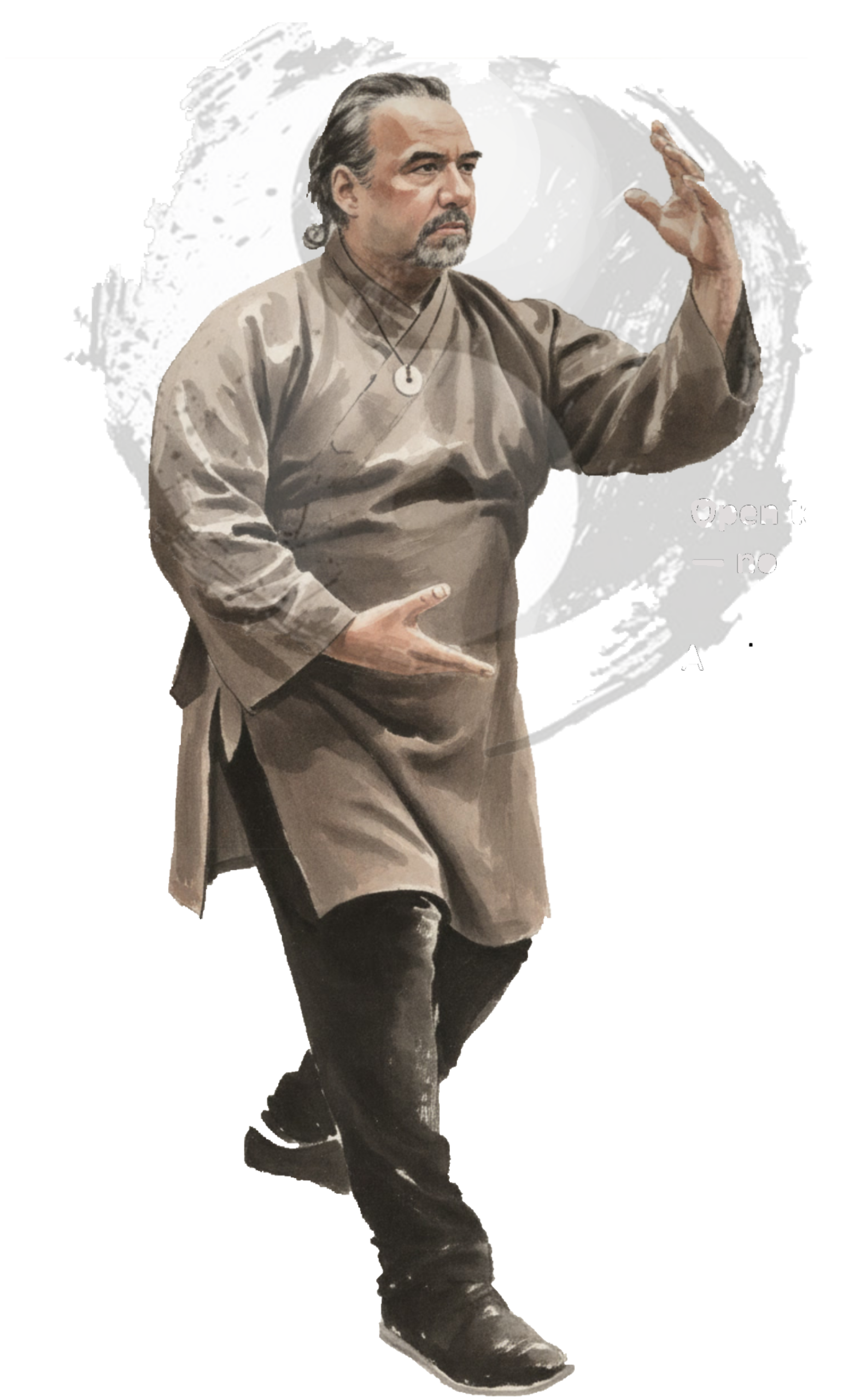
Instructor Marc Black brings four decades of experience in traditional Chinese martial arts to the teaching of TaiJi.
His approach emphasizes the details that make movement meaningful: posture, alignment, balance, coordination, intent, and the relationship between technique and principle.
Whether you're exploring TaiJi for personal wellbeing or for a deeper understanding of the traditional art, the aim is to help you discover—not merely imitate— what you're learning.
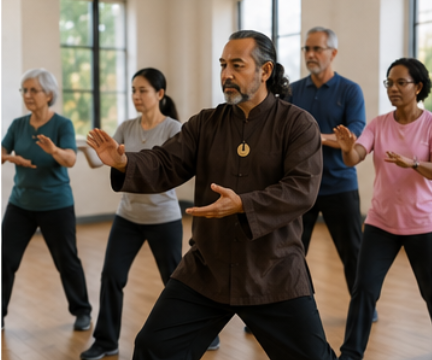
There's something special about learning alongside people who share your neighborhood, your building, or simply your curiosity.
TaiJi can be a personal practice, but it doesn't have to be a solitary one. Shared learning creates opportunities for encouragement, conversation, connection, and a sense of belonging.
From time to time, ASTA develops opportunities for particular residential communities and neighborhood groups to explore TaiJi together.
If you've arrived through an invitation from your community, your specific arrangements and registration details will be provided through that invitation.
Discover TaiJi in motion, from the quiet coordination of mind and body to the experience of learning together.
TaiJi in motion · Video 1
TaiJi in motion · Video 2
A little more balance. A little more strength. A little more confidence. A little more room to breathe.
In TaiJiQuan, softness is not weakness. It is the ability to release unnecessary tension while developing the balance, structure, awareness, and coordination that allow us to move with greater freedom.
We don't attain softness by simply doing less. We cultivate it by learning to use ourselves more completely—and with less unnecessary effort.
That's the practice. That's the aspiration. And there's always more to discover.