According to the research, regular meditation practice is crucial.
These days, self-help cliches like “mindfulness” and “self-compassion” are all the rage. However, a growing body of evidence suggests that engaging in such activities might have positive effects on mental health. This study, which is continuous, massive, and global in scope, demonstrates how and why these two methods are effective.
Meditation is a great tool for developing qualities like self-awareness and kindness toward oneself.
As a martial arts instructor, and as a meditator, I have spent over 36 years developing my personal abilities and teaching meditation both separately and as part of a martial arts curriculum to students. Evaluating mental health programs and psychology courses that teach mindfulness and compassion-based practices taught me much more.
Mindfulness is the practice of devoting undivided attention to the here and now without judgment. Self-compassion entails treating yourself with kindness and acceptance regardless of whether you are suffering or successful. Both are connected to a happier life.
Contrary to popular belief, self-compassion does not imply low standards, lack of desire, or decreased output. A willingness to take care of yourself versus allowing yourself to fall into stagnation, decrepitude, or even even further still to cause yourself harm is not in any way apathetic or lacking in personal drive or motivation. Instead, self-compassion has been related to higher levels of drive, less procrastination, and more satisfying interpersonal connections.
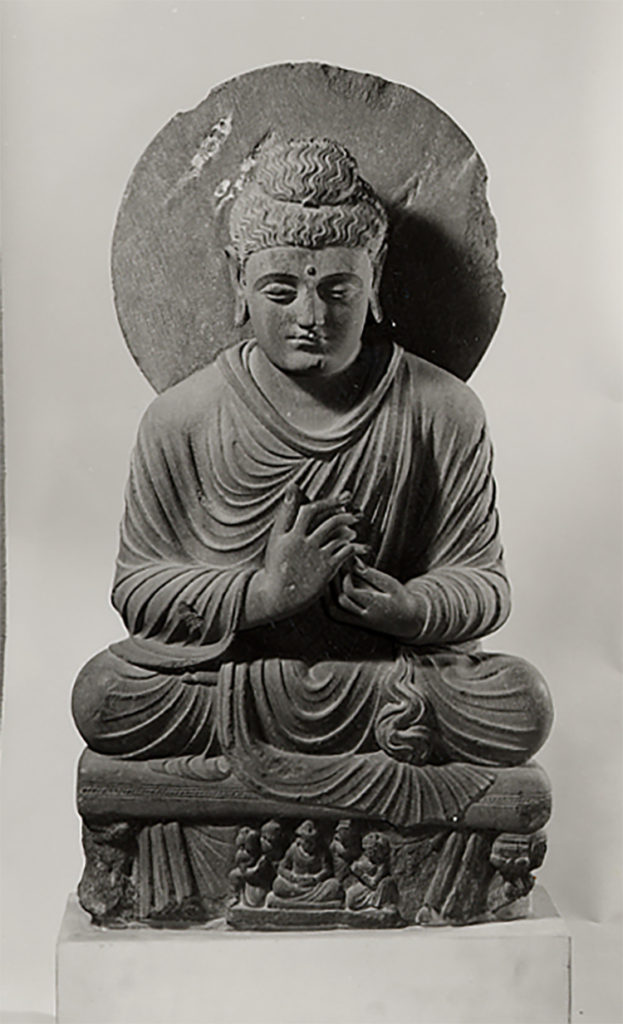

Have patience with yourself.
Have patience with the process of meditation.
When I initially tried meditation as a grade school student in the early 1980s, I’d found that the first few attempts at meditation are usually fraught with self-doubt, stubbornness, and distraction. Though they may at first seem like roadblocks, the mental exercise of overcoming them can help strengthen one’s meditation practice.
My body and mind were restless throughout the first six months of my meditation practice. I felt a sense of anxiety, like I had the energy to work but wasn’t getting things done. So, I’d go practice my made-up Kung Fu, read a book, anything but sit. Over time, I was able to become more self-aware and observe my impulses and thoughts without giving in to them.
It took some time to realize that every attempt to meditate is meditation. It’s more of a conceptual procedure than an endpoint. To be more attentive or self-compassionate, it takes more than a lofty goal.
The majority of effective programs consist of at least seven sessions. Repetition of these exercises has been shown to strengthen attention and reduce ruminating. They also help you be less hard on yourself, which can alleviate many mental health issues like low self-esteem, sadness, anxiety, eating disorders, self-harm, and PTSD.
Focusing and refocusing your attention after being distracted is an important part of meditation as well. Attentional abilities can be developed and ruminative thinking can be reduced through the practice of shifting and refocusing.
Training your mind to be less critical of itself involves making conscious efforts to refrain from judging it frequently during the session.
The Connection between Meditation and the "Default Mode Network"
I’ll explain the default mode network (DMN) in simple terms. Consider your brain to be a large computer with many interconnected pieces. The DMN is a network of brain areas that collaborate and interact with one another.
When we talk about the DMN being active, we imply that these brain areas are working and communicating with each other even when you aren’t paying attention to what’s going on around you. Do you ever find yourself daydreaming or lost in your own thoughts? That is when the DMN becomes activated.
The DMN is in charge of two critical functions: self-focus and mental time travel. Thinking about yourself, your thoughts, and what you want or need is what self-focus entails. Mental time-travel is similar to going back in time and remembering or envisioning things from the past or future.
When the DMN is not functioning properly or is not active enough, it can be connected to a variety of mental diseases. Mental diseases occur when our ideas and feelings do not function properly, causing us to feel sad, anxious, or confused.
The DMN is also critical for what is known as episodic memory processing. Episodic memory is like a movie that plays in your head regarding events in your life. It aids in the recall of certain events and experiences from your life. The DMN aids in this type of memory.
Finally, the DMN is involved in two more processes known as introspection and autobiographic memory. Introspection is the process of thinking about your own ideas and feelings, similar to looking inside yourself. Autobiographic memory is similar to keeping a personal diary in your brain that remembers everything relevant about your own life.
So, the default mode network is a specific group of brain areas that collaborate when you’re not paying attention to the outside world. It assists you in thinking about yourself, remembering events from the past, seeing the future, and comprehending your own ideas and feelings.
Training your mind to be less critical of itself involves making conscious efforts to refrain from judging it frequently during the session.
Meditation has a profound effect on the default mode network, a set of interconnected brain regions. There is a lot of circular thinking going on in this network, like revisiting an old argument you had with your sister from the 1990s. When you’re not actively engaged in something, it becomes most noticeable. The default mode network has been linked to negative emotions including worry and despair.
Studies reveal that after just one month of meditation, the default mode network’s noise is significantly reduced. It appears to make little difference which form of meditation one engages in.
Putting in Place a Meditation Routine

The idea that mindfulness is just a means to unwind or calm down is widely held yet incorrect. Instead, it entails a deliberate, empathetic focus on the here-and-now.
You can think of meditation as the “formal” portion of your practice, the time you set apart to focus on developing your capacity for awareness and compassion for yourself.
Paying close attention to one’s breathing is a common practice in mindfulness meditation. Common practice instructions advise sitting in a relaxed position and focusing on the area of the body in which the breath is felt the most to begin.
Your thoughts and emotions are bound to shift after a few deep breaths. As soon as you become aware of this, you can redirect your concentration back to your breathing and try not to be too hard on yourself for drifting off for a few minutes.
My first 20 or 30 minutes of meditation would consist of me having to refocus my mind thousands of times. I found that counting my breaths helped me focus on my breathing by creating a mental relationship between the two.
Loving-kindness meditation has been found to be the most effective method for developing empathy for oneself. If this sounds like something you’d want to pursue, find a quiet place where you can focus for at least five minutes, and silently say to yourself things like, “May I be safe. To my joy, I pray. I pray for good health. Peace be with me.” Anything along this line that you can hold a genuine feeling about is valid and on the list.
You can continue repeating the sentences even if your mind wanders, as long as you try not to be too hard on yourself when you become distracted. Then, if you’d like, you can extend those same wishes to other individuals or to the entirety of existence.
By recognizing when your mind wanders and returning it to your practice without judgment, you are exercising your mental awareness. You also strengthen your nonjudgmental attitude, which can help you stop self-critiquing and increase your attention-shifting skills, both of which can help you stop ruminating.
These methods are effective. Brain activity during meditation has been shown to reduce negative self-talk, depressive and anxious thoughts, and obsessive thinking.
For myself, I had spent all of my time trying to attain emptiness, but in the meantime, as an anchor, I’d hold thoughts of something I’d recently read from a Taoist or Buddhist text, or a quote from some master I was interested in. This way, at the very least, I was spending my ‘failed meditation’ time contemplating the texts and words of the ancient masters.

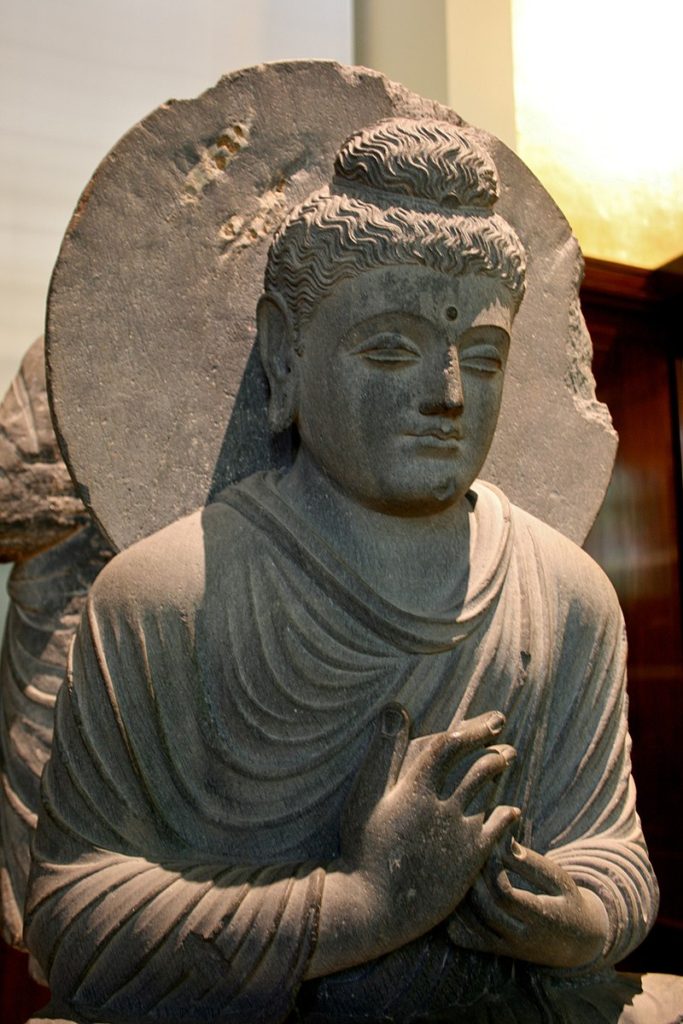
Pay Attention to Feelings During Meditation
Mindfulness is something that can be applied to any activity – or inactivity – you choose. Awareness of present-moment sensations, such as during eating or doing the dishes, is another form of mindfulness. Let’s take eating as an example. You put it in your mouth, chew it up if needed, and swallow. Next. That’s it for most people. Well, what about chewing it more slowly; slowly to feel the resistance of the food that you’re eating, slowly to feel the texture of it, or if there are several things going on as in a soup of stew. Chewing more slowly to have an experience of the flavors as they move around from one portion of your mouth to another – because, after all, different parts of your tongue experience different flavors and types of flavors such as sweet, sour, tart, etc. And, in fact, chewing more slowly, more mindfully, allows the food to be broken down to much smaller shapes and amounts, as well as infusing it with more saliva, whose enzymatic functions combined with the smaller bits allow for a healthier, and more complete, digestion of the food you’re eating.
Everything’s better with meditation 😉
Constant formal and informal practice might alter one’s perspective, both are beneficial, although if you’re going to be informal about the practice you should also set definite times for formal practice. Also, it’s not as effective if you only do it sometimes. Just like doing a single set of sit-ups won’t help you build stronger ab muscles, doing multiple rounds of crunches every day will. Ultimately, you want to get to the place where you can simply apply the meditative state as you would any other tool, eliminating the need for pre-ascribed locations, times, etc.
Both mindfulness and loving-kindness meditation have been shown to have positive effects on mental health, with practitioners reporting fewer negative thoughts and feelings about themselves. Participants in an eight-week mindfulness program reported lower levels of self-criticism. Decreases in both depression and anxiety were associated with these modifications.
Finally, it’s important to note that self-criticism may increase in novice meditators before it decreases.
It’s common for people to be harsh on themselves when they lose focus during meditation due to years or decades of chronic self-judgment. As students progress through their first few weeks of practice, however, they report feeling less critical of themselves during meditation and in other areas of their lives.
If You're Interested In Learning More about Meditation...
If you’re interested in pursuing seated meditation, or a movement meditation method such as TaiJiQuan, please click this below. We offer single Introduction Sessions, as well as short and long-term series. These classes are taught at our facility, but if you have a group of people that meets regularly and you would like to have us come to your facility you can arrange for them to be taught at your location as well.