The Quality of Movement in TaiJiQuan
A Complete Guide to Whole-Body Coordination, Balance, Force, and Spirit
PART II
Synchronization Without Uniformity
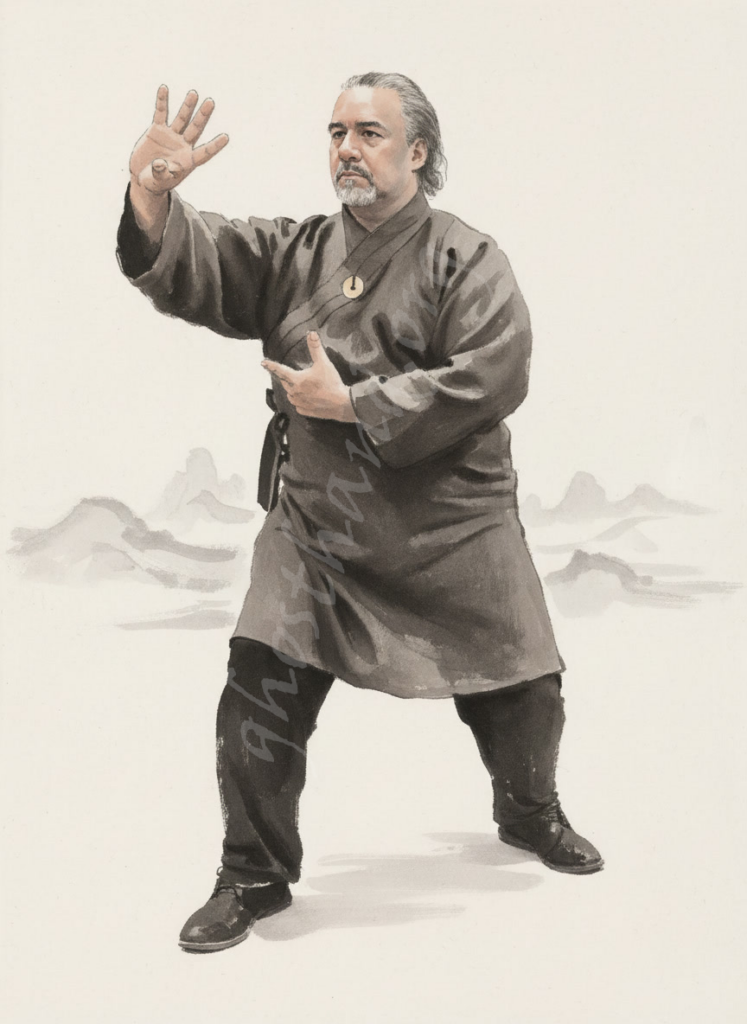
One of the great misunderstandings about TaiJi movement is the belief that all parts of the body must move at the same speed, in the same direction, at the same time.
This is not true.
In high-quality TaiJi movement:
- One limb may move slowly while another accelerates
- One part of the body may spiral inward while another expands outward
- Some joints remain stable while others articulate deeply
Yet despite these differences, the body remains synchronized.
This is not mechanical synchronization—it is functional coordination.
Every part of the body:
- Knows what the other parts are doing
- Supports the same intention
- Serves the same structural and energetic goal
This is why TaiJiQuan cannot be reduced to external shape alone. The internal timing is what makes the movement alive.
Directional Independence With Total Integration
Another challenge lies in directional complexity.
In TaiJiQuan:
- One arm may move forward while the torso turns sideways
- The weight may sink downward as the hands rise
- The body may advance while the intention withdraws
Each limb may travel in a different direction, yet the center remains coherent.
This level of movement requires:
- A refined sense of the dantian and waist
- Continuous awareness of the spine
- A stable, responsive connection to the ground
Without this, movement becomes scattered, disconnected, and weak—no matter how “soft” it appears.
Final Thoughts: Mind-Body-Spirit Integration
You deserve to feel safe, capable, and alive in your own skin, and at peace in your own mind. Self-defense training teaches you how to protect yourself, while martial arts cultivates focus, strength, and peace of mind. Together, they give you a mind-body-spirit connection that radiates into every corner of life. If you’re in Pittsburgh and ready to claim that power for yourself, come train with us — and see how quickly your world begins to change.